
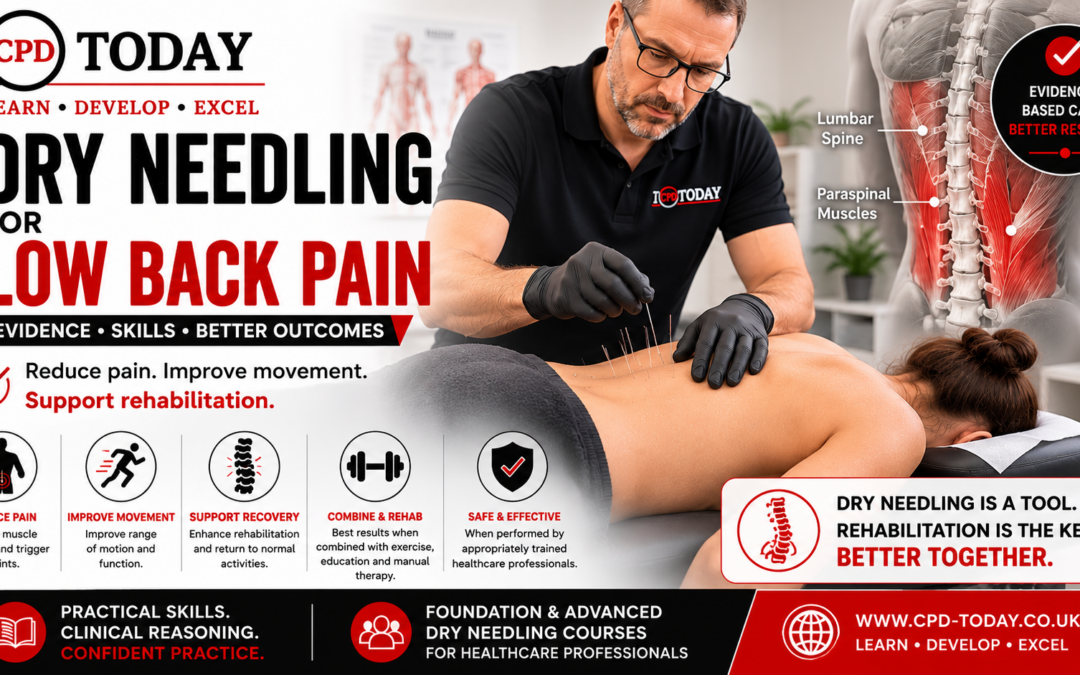
Dry Needling for Low Back Pain: What Does the Evidence Say?
Meta Description: Discover how dry needling can help manage low back pain. Learn about the latest evidence, benefits, clinical applications and how dry needling fits into an evidence-based rehabilitation programme.
Dry Needling for Low Back Pain
Low back pain is one of the most common musculoskeletal conditions seen by physiotherapists, osteopaths, chiropractors and other manual therapists. It affects millions of people worldwide and is a leading cause of pain, disability and time away from work.
While exercise, education and self-management remain the foundation of treatment, dry needling has become an increasingly popular adjunct to help reduce pain, improve movement and support rehabilitation.
But how effective is it, and when should it be used?
What Is Dry Needling?
Dry needling involves inserting fine, sterile, single-use needles into muscles and other soft tissues to help reduce pain, improve muscle function and restore movement.
Unlike traditional acupuncture, dry needling is based on:
- Functional anatomy
- Pain science
- Neurophysiology
- Biomechanics
- Clinical reasoning
Treatment is guided by a thorough assessment and should always form part of a wider rehabilitation programme.
Can Dry Needling Help Low Back Pain?
Current evidence suggests dry needling can be beneficial for many people with mechanical low back pain, particularly when used alongside exercise therapy and patient education.
Potential benefits include:
- Reducing pain intensity
- Improving lumbar movement
- Decreasing muscle tension
- Improving function
- Supporting return to normal activity
- Helping patients participate more comfortably in rehabilitation
The greatest improvements are typically seen when dry needling is integrated into a comprehensive, evidence-based management plan.
Which Patients May Benefit?
Dry needling may be considered for patients with:
- Acute mechanical low back pain
- Chronic low back pain
- Myofascial pain
- Muscle guarding
- Reduced lumbar mobility
- Movement-related pain
- Sports-related low back injuries
Every patient should undergo a detailed assessment to determine whether dry needling is appropriate.
What Does the Research Say?
Systematic reviews and meta-analyses suggest that dry needling can reduce pain and improve function in people with low back pain, particularly in the short to medium term.
Research consistently highlights that the best outcomes occur when dry needling is combined with:
- Exercise therapy
- Patient education
- Manual therapy
- Progressive rehabilitation
Rather than replacing active treatment, dry needling can help create a window of opportunity for patients to move more comfortably and engage more effectively in rehabilitation.
How Does Dry Needling Work?
Several mechanisms may explain its effects:
Pain Modulation
Needling can stimulate the nervous system and activate natural pain-inhibiting pathways.
Reduced Muscle Tension
Dry needling may decrease excessive muscle activity and improve muscle relaxation.
Improved Movement
Reduced pain and muscle guarding often allow patients to move more freely.
Enhanced Rehabilitation
Patients who are more comfortable are often better able to complete strengthening and mobility exercises.
Dry Needling Is Not a Stand-Alone Treatment
One of the biggest misconceptions is that dry needling alone will “fix” low back pain.
Modern evidence supports a multimodal approach that includes:
- Patient education
- Exercise therapy
- Strengthening
- Mobility work
- Manual therapy
- Load management
- Lifestyle advice
Dry needling should support these interventions—not replace them.
Safety Considerations
When performed by appropriately trained healthcare professionals, dry needling has an excellent safety profile.
Clinicians should always consider:
- Contraindications
- Precautions
- Informed consent
- Infection control
- Relevant anatomy
- Ongoing reassessment
Patient safety should remain the highest priority.
Why Learn Dry Needling for Low Back Pain?
Low back pain is one of the most frequently treated conditions in musculoskeletal practice.
Developing dry needling skills can help clinicians:
- Expand treatment options
- Improve patient comfort
- Support rehabilitation
- Enhance clinical confidence
- Deliver more comprehensive care
High-quality training ensures clinicians understand not only how to needle, but when and why to use the technique.
Learn with CPD Today
At CPD Today, our Foundation and Advanced Dry Needling courses combine evidence-based teaching with extensive hands-on practical training.
You’ll learn:
- Lumbar anatomy
- Safe needling techniques
- Clinical reasoning
- Contraindications and precautions
- Integrating dry needling with rehabilitation
- Managing common low back pain presentations
Our courses are designed for physiotherapists, osteopaths, chiropractors and other manual therapists who want to deliver safe, effective and evidence-based patient care.
Clinical Takeaway
Dry needling can be an effective adjunct for managing low back pain when combined with exercise, education and rehabilitation. It should be used to support movement, reduce pain and improve participation in recovery—not as a stand-alone treatment. Strong clinical reasoning and patient-centred care remain the key to achieving the best outcomes.
Frequently Asked Questions
Is dry needling effective for low back pain?
Research suggests it can reduce pain and improve function, especially when combined with exercise and rehabilitation.
Can dry needling cure low back pain?
No. It is one component of a comprehensive treatment programme and should not replace active rehabilitation.
Is dry needling safe?
Yes. When performed by appropriately trained healthcare professionals following recognised safety guidelines, it has a low risk of serious adverse events.
Should all patients with low back pain receive dry needling?
No. Treatment should always be based on a thorough assessment, patient goals and clinical reasoning.
References
- Hu HT, Gao H, Ma RJ, et al. (2018). Dry Needling for Low Back Pain: A Systematic Review and Meta-analysis. Archives of Physical Medicine and Rehabilitation.
- Gattie E, Cleland JA, Snodgrass SJ. (2017). The Effectiveness of Trigger Point Dry Needling for Musculoskeletal Conditions by Physical Therapists. Journal of Orthopaedic & Sports Physical Therapy.
- National Institute for Health and Care Excellence (NICE). Low Back Pain and Sciatica in Over 16s: Assessment and Management (NG59).
Continue Your Learning
Explore more evidence-based articles from CPD Today:
- What Is Dry Needling?
- Dry Needling vs Acupuncture
- The Evidence for Dry Needling
- Safety Guidelines for Dry Needling
- Contraindications for Dry Needling
- Common Mistakes Beginners Make with Dry Needling
- How to Integrate Dry Needling into a Rehabilitation Programme
- Dry Needling for Neck Pain (coming next in the series)