
The next article in the topical cluster would naturally be:
Dry Needling for Neck Pain: Benefits, Evidence and Clinical Applications
Meta Description: Discover how dry needling can help manage neck pain. Learn about the latest evidence, clinical applications, safety and how to integrate dry needling into an evidence-based rehabilitation programme.
Dry Needling for Neck Pain: Benefits, Evidence and Clinical Applications
Neck pain is one of the most common musculoskeletal conditions affecting adults, with many people experiencing symptoms at some point during their lives. Whether caused by poor posture, prolonged desk work, stress, trauma or sporting activities, neck pain can significantly affect daily function, sleep and quality of life.
Alongside education, exercise and manual therapy, dry needling has become an increasingly popular treatment option for reducing pain, improving movement and supporting rehabilitation.
But what does the evidence say, and when should clinicians consider using it?
Understanding Neck Pain
Neck pain is rarely caused by a single structure. Symptoms often involve a combination of:
- Muscle dysfunction
- Joint stiffness
- Myofascial trigger points
- Reduced movement
- Altered motor control
- Pain sensitisation
Successful management requires identifying the factors contributing to each patient’s symptoms and tailoring treatment accordingly.
What Is Dry Needling?
Dry needling uses sterile, single-use filament needles to treat muscles and other soft tissues that contribute to pain and movement dysfunction.
Unlike traditional acupuncture, dry needling is based on:
- Functional anatomy
- Pain science
- Neurophysiology
- Clinical reasoning
- Biomechanics
Treatment is always guided by a detailed clinical assessment rather than following traditional acupuncture meridians.
Can Dry Needling Help Neck Pain?
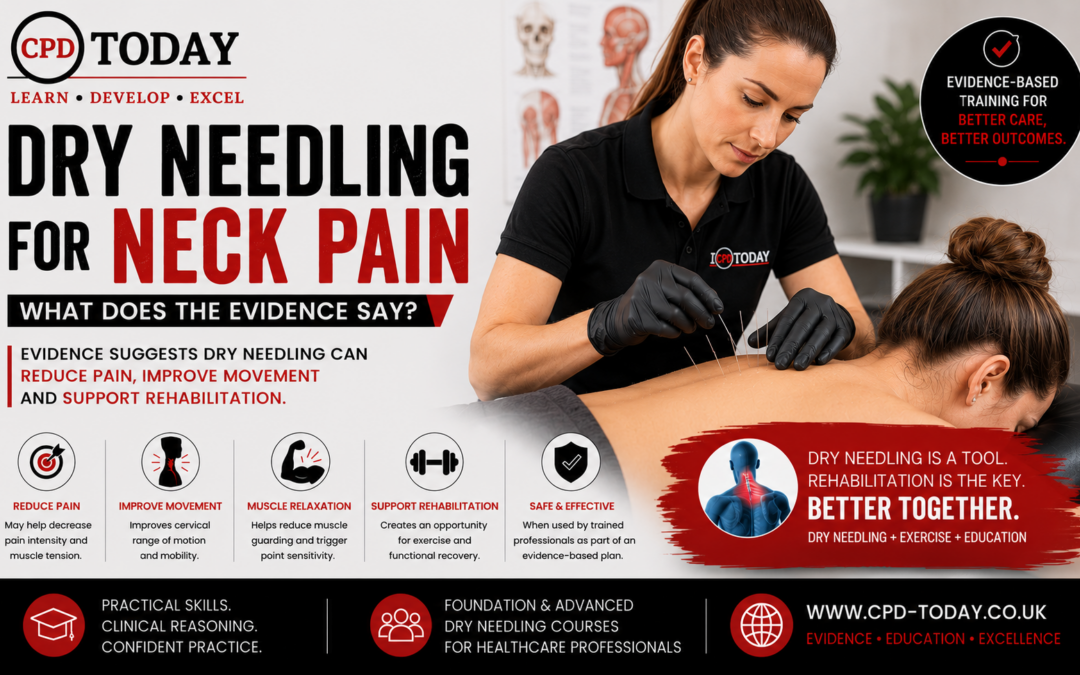
Research suggests dry needling can be an effective addition to treatment for many patients with mechanical neck pain.
Potential benefits include:
- Reduced pain
- Improved cervical range of motion
- Decreased muscle tension
- Reduced trigger point sensitivity
- Improved function
- Better tolerance of rehabilitation exercises
For many patients, reducing pain allows them to move more confidently and participate more effectively in rehabilitation.
Which Patients May Benefit?
Dry needling may be appropriate for patients with:
- Acute mechanical neck pain
- Chronic neck pain
- Myofascial neck pain
- Postural neck pain
- Office-related neck pain
- Cervicogenic headaches
- Sports-related neck injuries
- Upper trapezius dysfunction
Treatment should always follow a comprehensive assessment to identify the most appropriate management strategy.
What Does the Evidence Say?
Numerous systematic reviews and meta-analyses have investigated dry needling for neck pain.
Current evidence suggests it can:
- Reduce pain in the short to medium term
- Improve cervical movement
- Reduce muscle sensitivity
- Improve function
- Enhance the effectiveness of rehabilitation when combined with exercise and manual therapy
The best outcomes occur when dry needling forms part of a multimodal, evidence-based treatment programme rather than being used as a stand-alone intervention.
How Does Dry Needling Work?
Several mechanisms may contribute to symptom improvement.
Pain Modulation
Needling stimulates the nervous system and activates natural pain-inhibiting pathways.
Muscle Relaxation
Dry needling may reduce excessive muscle activity and decrease trigger point sensitivity.
Improved Movement
Reduced pain and muscle guarding can help restore cervical mobility.
Supporting Rehabilitation
Improved comfort allows patients to perform strengthening and mobility exercises more effectively.
Safety Considerations
The cervical region contains important anatomical structures, making detailed anatomical knowledge essential.
Clinicians should always:
- Carry out a full assessment
- Obtain informed consent
- Understand cervical anatomy
- Follow recognised safety guidelines
- Be aware of contraindications and precautions
- Reassess patient response after treatment
Appropriate training is fundamental to safe practice.
Dry Needling Is Only Part of the Solution
Although dry needling can reduce pain, long-term improvement depends on addressing the underlying causes.
Treatment should include:
- Exercise therapy
- Postural advice
- Ergonomic education
- Manual therapy where appropriate
- Load management
- Strengthening
- Self-management strategies
Dry needling creates an opportunity for rehabilitation—it does not replace it.
Learn with CPD Today
At CPD Today, our Foundation and Advanced Dry Needling courses teach clinicians how to safely and effectively manage common neck pain presentations.
You’ll learn:
- Cervical anatomy
- Clinical reasoning
- Safe needling techniques
- Contraindications and precautions
- Integrating dry needling with rehabilitation
- Evidence-based management of neck pain
Our courses combine practical teaching with current research to help clinicians build confidence and improve patient outcomes.
Clinical Takeaway
Dry needling can be an effective adjunct for managing mechanical neck pain when integrated into a comprehensive rehabilitation programme. By combining it with exercise, education and manual therapy, clinicians can reduce pain, improve movement and help patients return to normal function more quickly. Successful outcomes depend on strong clinical reasoning, detailed anatomical knowledge and evidence-based practice.
Frequently Asked Questions
Can dry needling help neck pain?
Yes. Research suggests it can reduce pain and improve movement, particularly when combined with rehabilitation.
Is dry needling safe for the neck?
When performed by appropriately trained healthcare professionals with detailed anatomical knowledge, dry needling has a good safety profile. Extra care is required due to the complex anatomy of the cervical region.
Does dry needling replace exercise?
No. Dry needling should complement exercise therapy and patient education rather than replace them.
Can dry needling help headaches?
It may help some patients with cervicogenic headaches or headaches associated with muscular dysfunction, following appropriate assessment.
References
- Liu L, Huang QM, Liu QG, et al. (2015). Effectiveness of Dry Needling for Myofascial Trigger Points Associated with Neck and Shoulder Pain: A Systematic Review and Meta-analysis. Archives of Physical Medicine and Rehabilitation.
- Gattie E, Cleland JA, Snodgrass SJ. (2017). The Effectiveness of Trigger Point Dry Needling for Musculoskeletal Conditions by Physical Therapists. Journal of Orthopaedic & Sports Physical Therapy.
- National Institute for Health and Care Excellence (NICE). Neck Pain and Associated Disorders – Musculoskeletal Assessment and Management.
Continue Your Learning
Continue exploring our evidence-based dry needling series:
- What Is Dry Needling?
- Dry Needling vs Acupuncture
- The Evidence for Dry Needling
- Safety Guidelines for Dry Needling
- Contraindications for Dry Needling
- Common Mistakes Beginners Make
- How to Integrate Dry Needling into Rehabilitation
- Dry Needling for Low Back Pain
- Dry Needling for Shoulder Pain (next in the series)