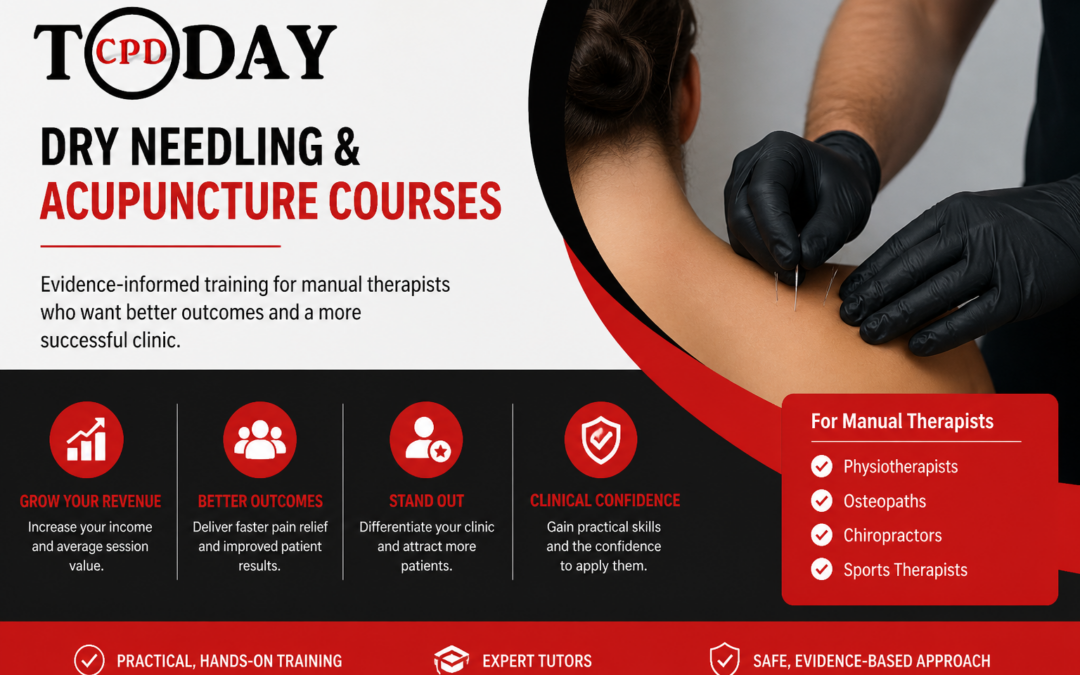
Dry Needling & Acupuncture Courses for Manual Therapists | Boost Clinic Revenue with CPD Today
If you’re a physiotherapist, osteopath, chiropractor, or sports therapist looking to grow your clinic, increase revenue, and deliver better patient outcomes, adding dry needling and acupuncture to your skillset is one of the most effective upgrades you can make.
At CPD Today, our accredited dry needling and acupuncture courses are designed specifically for manual therapists who want practical, evidence-informed skills they can use immediately in clinic.
Why Dry Needling & Acupuncture Are Essential Skills for Modern Manual Therapists
Healthcare is evolving—and so are patient expectations. Today’s patients are actively searching for clinics that offer advanced, results-driven treatments for pain relief and recovery.
By training in dry needling or acupuncture with CPD Today, you can:
Stand out in a competitive market
Attract more private patients
Offer faster, more effective results
Position yourself as an expert in musculoskeletal care
Clinical Benefits: Better Results for Your Patients
Faster Pain Relief & Recovery
Dry needling and acupuncture are highly effective for reducing pain and improving function, especially in:
Myofascial trigger points
Chronic musculoskeletal pain
Sports injuries and overload syndromes
Patients often experience immediate or rapid improvements, which increases satisfaction and trust.
Improved Treatment Outcomes
Combining manual therapy with needling techniques allows you to:
Treat both the cause and symptoms of pain
Restore movement more efficiently
Achieve longer-lasting results
Treat a Wider Range of Conditions
Adding needling expands your clinical scope to include:
Neck and back pain
Tendinopathies
Headaches and migraines
Postural dysfunction
Sports performance optimisation
Business Growth: Increase Clinic Revenue & Patient Retention
Increase Your Income Per Session
Dry needling and acupuncture are premium services that allow you to:
Charge higher treatment fees
Offer specialist appointments
Add value to existing sessions
Even a small fee increase per patient can lead to significant monthly revenue growth.
Attract More Patients
Clinics offering dry needling or acupuncture often rank higher in local searches for:
“Dry needling near me”
“Acupuncture for back pain”
“Sports injury treatment”
This means more visibility, more bookings, and more growth.
Improve Patient Retention & Referrals
When patients see faster results, they:
Complete their treatment plans
Return for future care
Recommend your clinic to friends and family
This creates a consistent stream of word-of-mouth referrals.
Why Choose CPD Today for Dry Needling & Acupuncture Training?
At CPD Today, we focus on delivering high-quality, practical training that translates directly into clinical success.
Our courses offer:
Hands-on, clinically relevant teaching
Evidence-informed techniques
Small group learning for better support
Clear progression from beginner to advanced levels
Whether you’re new to needling or looking to advance your skills, our courses are designed to help you confidently integrate techniques into your daily practice.
Who Are These Courses For?
Our dry needling and acupuncture courses are ideal for:
Physiotherapists
Osteopaths
Chiropractors
Sports therapists
If you treat musculoskeletal pain, these skills will enhance your results and expand your treatment options.
Future-Proof Your Clinic
The demand for effective, non-pharmacological pain treatments continues to grow. Clinics that invest in advanced skills like dry needling and acupuncture are better positioned to thrive.
Training with CPD Today helps you:
Stay ahead of industry trends
Deliver better patient outcomes
Build a more profitable, resilient clinic
Frequently Asked Questions (FAQ)
Is dry needling the same as acupuncture?
Dry needling and acupuncture both use fine needles, but they are based on different clinical frameworks. Dry needling is typically rooted in Western medicine and focuses on trigger points, while acupuncture is based on traditional Chinese medicine principles. Many modern therapists integrate both approaches.
Do I need prior experience to take a course with CPD Today?
No. CPD Today offers courses for beginners through to advanced practitioners, so you can start at the right level for your experience.
Is dry needling safe?
Yes—when performed by a trained professional. Our courses emphasise safety, clinical reasoning, and best practice to ensure you can use needling techniques confidently and responsibly.
How quickly can I use these skills in my clinic?
Immediately. Our courses are designed to be practical and hands-on, so you can start applying techniques with appropriate patients as soon as you complete your training.
Will adding dry needling increase my clinic revenue?
In most cases, yes. Clinics commonly see increased revenue through higher session fees, improved retention, and attracting new patients seeking these treatments.
Are CPD Today courses accredited?
Yes, CPD Today courses are designed to meet continuing professional development standards, supporting your ongoing learning and professional requirements.
Start Growing Your Clinic with CPD Today
If you’re ready to:
Deliver better patient outcomes
Increase your clinic revenue
Stand out as a leading manual therapist
Then now is the time to invest in your future.
Explore CPD Today dry needling and acupuncture courses today and take your practice to the next level.
Rigid Sports Strapping: Properties, Clinical Actions & Why Professional Training Matters
4
Rigid sports strapping remains one of the most essential skills in sports medicine, physiotherapy and pitch-side care. Designed to restrict excessive movement, protect injured structures and provide joint stability, rigid taping is widely used in acute injury management, return-to-play protocols and injury prevention strategies.
For clinicians searching for sports taping courses, rigid strapping certification, ankle taping CPD training or strapping and taping courses in the UK, mastering rigid taping techniques is fundamental.
What Is Rigid Sports Strapping?
Rigid sports strapping uses non-elastic adhesive tape to:
Limit unwanted joint movement
Stabilise ligaments
Protect vulnerable tissues
Provide external mechanical support
Unlike kinesiology or dynamic taping, rigid tape is designed to restrict motion, making it particularly effective in high-demand sports and early-stage ligament injuries.
Rigid strapping is commonly seen in sports such as rugby, football, basketball and athletics, where joint stability is critical for performance and safety.
Key Properties of Rigid Sports Tape
1. Non-Elastic Structure
Rigid tape does not stretch, allowing clinicians to:
Control joint range
Block excessive inversion/eversion
Protect healing ligaments
2. Strong Adhesion
Designed for high-intensity sport, rigid tape:
Withstands sweat and movement
Maintains structural integrity during competition
Provides consistent support
3. Mechanical Stability
Rigid strapping creates:
External ligament reinforcement
Joint compression
Structural protection during impact
How Rigid Sports Strapping Works (Clinical Actions)
✔ Movement Restriction
Rigid strapping can:
Prevent excessive ankle inversion
Limit thumb hyperextension
Restrict patellar maltracking
Protect AC joint injuries
✔ Ligament Protection
By reinforcing joint structures, rigid taping:
Reduces strain on injured ligaments
Supports return-to-play
Minimises reinjury risk
✔ Proprioceptive Feedback
Although primarily mechanical, rigid tape also:
Enhances joint awareness
Improves neuromuscular control
Reinforces safer movement patterns
Clinical Benefits in Rehabilitation
Rigid sports strapping plays a crucial role in:
Acute ankle sprains
Wrist and thumb injuries
Patellofemoral pain
Shoulder instability
Contact sport joint protection
🔹 Early-Stage Injury Management
Rigid taping can:
Protect healing tissues
Allow modified participation
Reduce pain from excessive movement
🔹 Return-to-Play Support
Athletes transitioning back to sport benefit from:
Added joint security
Psychological confidence
Reduced reinjury risk
🔹 Performance Confidence
Many athletes report feeling:
More stable
More confident in cutting and pivoting
Better protected during contact
Rigid Strapping in Injury Prevention
Preventative ankle strapping remains common in high-risk sports. Evidence suggests external ankle support may reduce recurrent sprain rates in athletes with prior injury history.
Rigid taping can be integrated into:
Pre-match preparation
Tournament settings
High-risk training phases
Post-rehabilitation return-to-sport plans
For clinicians working pitch-side or in sports environments, rigid strapping is an indispensable skill.
Why Attend a Professional Sports Taping Course?
While rigid taping appears straightforward, effective application requires:
A structured rigid sports strapping course provides:
Hands-on practical experience
Evidence-informed protocols
Joint-specific taping techniques
Clinical reasoning development
Recognised CPD accreditation
If you’re searching for:
Rigid sports taping course UK
Ankle strapping CPD training
Sports taping certification
Pitch-side taping course
Strapping and taping CPD
Sports injury taping training
Professional education ensures safe, effective and confident application.
Expand Your Clinical & Pitch-Side Skills
Adding rigid sports strapping expertise allows you to:
Work confidently in sporting environments
Support athletes safely during competition
Improve return-to-play outcomes
Deliver immediate mechanical protection
Increase employability in sport and private practice
Clinicians trained in rigid strapping often experience:
Greater athlete trust
Increased referrals
Expanded sports coverage opportunities
Enhanced professional credibility
Learn Rigid Sports Strapping with CPD Today
At CPD Today, our comprehensive Strapping and Taping Courses provide practical, hands-on training in:
✔ Ankle strapping techniques ✔ Knee and patella taping ✔ Thumb and wrist support ✔ Shoulder and AC joint strapping ✔ Sport-specific taping applications ✔ Clinical reasoning for injury management ✔ CPD-accredited certification
Kinesiology Taping (K-Taping): Properties, Clinical Actions & Why Professional Training Matters
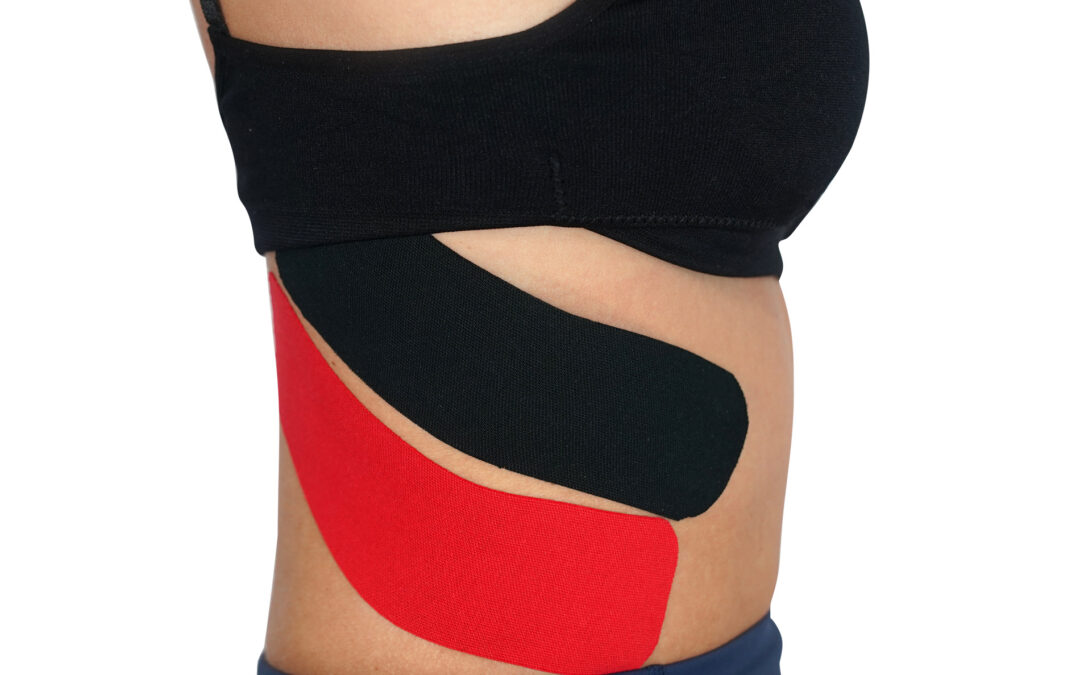
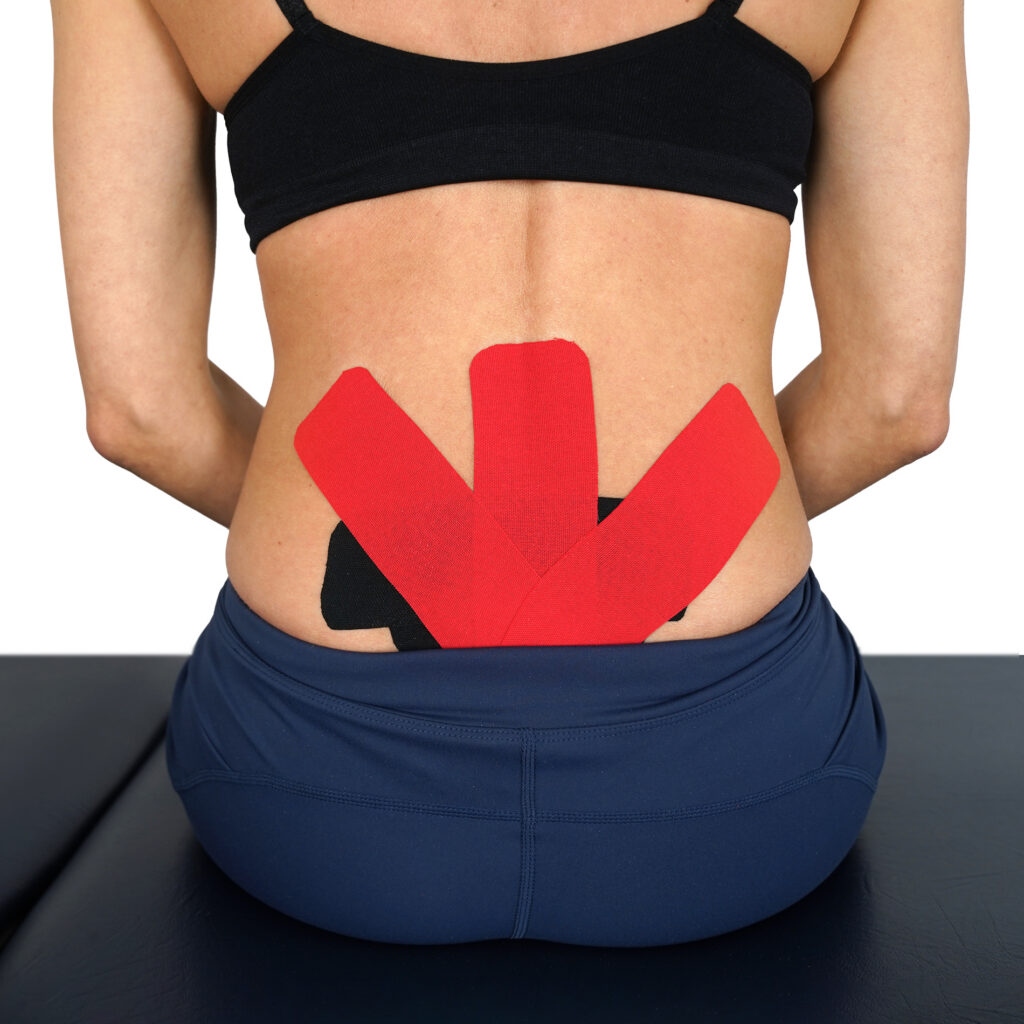
Kinesiology Taping (K-Taping) has become one of the most recognised therapeutic taping methods in modern rehabilitation and sports therapy. Seen across elite sport, private practice clinics and NHS settings, kinesiology tape is valued for its ability to reduce pain, support movement, enhance neuromuscular control and facilitate recovery — without restricting range of motion.
For clinicians searching online for kinesiology taping courses, K-Taping CPD training, sports taping certification, or strapping and taping courses in the UK, understanding both the theory and practical application is essential.
What Is Kinesiology Taping?
Kinesiology taping is a therapeutic taping method developed by Dr. Kenzo Kase in the 1970s. Unlike rigid athletic tape, K-Tape is:
Elastic (stretching up to 140–180% of its original length)
Lightweight and breathable
Designed to mimic the elasticity of human skin
Worn for several days at a time
Its primary goal is to support the body’s natural healing processes while allowing full functional movement.
Key Properties of Kinesiology Tape
1. Elastic Therapeutic Support
K-Tape stretches longitudinally, enabling:
Dynamic joint movement
Muscle facilitation or inhibition
Functional rehabilitation support
2. Skin-Lifting Effect
When applied correctly, the tape gently lifts the skin, which may:
Improve local circulation
Reduce pressure on nociceptors
Support lymphatic drainage
3. Lightweight & Comfortable
Patients can:
Wear it during sport
Shower with it
Maintain daily activity without restriction
How Kinesiology Taping Works (Clinical Actions)
✔ Pain Modulation
Through stimulation of cutaneous mechanoreceptors, K-Taping may:
Reduce pain perception
Alter sensory input
Improve patient comfort during movement
✔ Neuromuscular Facilitation
Depending on direction and tension, tape can:
Facilitate underactive muscles
Inhibit overactive muscles
Improve proprioceptive awareness
✔ Lymphatic & Swelling Support
Fan and web techniques are commonly used to:
Support oedema management
Encourage lymphatic flow
Reduce post-injury swelling
✔ Postural Re-education
Strategic application helps:
Reinforce improved movement patterns
Provide tactile feedback
Enhance motor control
Clinical Benefits in Rehabilitation
Kinesiology taping is widely used in:
Shoulder impingement
Patellofemoral pain
Ankle sprains
Lower back pain
Tendinopathies
Post-operative recovery
🔹 Early-Stage Injury Management
Tape provides:
Gentle support
Pain relief without immobilisation
Confidence to move
🔹 Movement Retraining
As part of a comprehensive rehabilitation programme, K-Tape:
Enhances proprioceptive feedback
Reinforces corrective exercise
Supports graded loading
🔹 Patient Engagement
Many patients report:
Immediate symptomatic relief
Increased body awareness
Greater confidence returning to activity
Kinesiology Taping in Injury Prevention & Sport
In sports environments, K-Taping is commonly used to:
Support fatigued muscles
Enhance proprioception
Reduce overload risk
Assist return-to-play transitions
It integrates effectively alongside:
Strength & conditioning programmes
Manual therapy
Biomechanical assessment
Functional rehabilitation planning
For therapists looking to expand into sports taping for athletes, Kinesiology Taping is a highly versatile addition to your clinical toolkit.
Why Attend a Professional Kinesiology Taping Course?
While tape may look simple to apply, clinical effectiveness depends on:
✔ Correct tension selection ✔ Directional application principles ✔ Patient assessment and reasoning ✔ Understanding indications and contraindications
A structured kinesiology taping course provides:
Evidence-informed theory
Hands-on practical learning
Clinical application frameworks
Integration into rehabilitation planning
Recognised CPD certification
If you’re searching for:
Kinesiology taping course UK
K-Taping CPD course
Sports taping training
Strapping and taping certification
Taping course for physiotherapists
Rehabilitation taping CPD
Taping Course
Professional training ensures safe, confident and effective practice.
Expand Your Professional Skill Set
Adding Kinesiology Taping to your services allows you to:
Improve patient outcomes
Offer visible, value-added treatment
Enhance rehabilitation compliance
Differentiate your clinic
Increase professional credibility
Clinicians trained in K-Taping frequently report:
Faster pain reduction
Better exercise tolerance
Stronger patient engagement
Increased referrals for sports injury management
Learn Kinesiology Taping with CPD Today
At CPD Today, our Strapping and Taping Courses provide comprehensive training in:
Biomechanical Taping: Properties, Actions, Benefits & Why Training Matters
In modern rehabilitation and sports therapy, Biomechanical taping (also known as Dynamic or Active Tape) is transforming how clinicians support movement, reduce pain, and optimise performance.
Unlike traditional rigid sports tape or kinesiology tape, biomechanical tape is designed to absorb load, assist movement, and reduce strain on injured tissues — making it a powerful tool in physiotherapy, sports therapy, chiropractic, osteopathy, and rehabilitation settings.
If you’re searching for taping courses, strapping and taping certification, CPD taping training, or sports taping courses in the UK, understanding the science and application of dynamic taping is essential.
What Is Biomechanical Taping?
Dynamic taping is a highly elastic tape with four-way stretch and strong recoil properties. It is engineered to:
Absorb and redistribute mechanical load
Assist or resist movement
Reduce stress on injured tissues
Support functional movement patterns
Unlike rigid taping (which restricts movement) or kinesiology tape (which mainly targets skin and neurophysiological effects), biomechanical taping works by directly influencing biomechanics and load management.
Key Properties of Biomechanical Tape
1. High Elasticity with Strong Recoil
The tape stretches significantly and recoils powerfully, allowing it to:
Store elastic energy
Assist weakened muscle groups
Reduce muscular fatigue
2. Load Absorption
Biomechanical tape can:
Offload tendons
Reduce compressive joint forces
Decrease strain during repetitive movement
3. Multi-Directional Stretch
Four-way stretch allows for:
Functional movement
Joint range preservation
Dynamic support without restriction
How Dynamic Taping Works (Biomechanical Actions)
✔ Load Reduction
By absorbing force during movement, the tape reduces the mechanical load on:
Injured tendons (e.g., Achilles, patellar tendon)
Muscle strains
Overloaded joints
✔ Movement Assistance
The tape can:
Assist weak muscles
Encourage optimal movement patterns
Improve neuromuscular control
✔ Fatigue Management
Ideal for athletes and active patients, biomechanical taping:
Reduces energy expenditure
Delays muscle fatigue
Supports performance during sport
Clinical Benefits in Rehabilitation
Dynamic taping can be incorporated into rehabilitation programmes to:
🔹 Support Early-Stage Injury
Reduce pain while maintaining movement
Offload irritated tissues
Encourage active rehab instead of immobilisation
🔹 Enhance Functional Rehab
Assist specific movement patterns
Improve tolerance to load
Support return-to-play protocols
🔹 Improve Patient Confidence
Patients feel:
Supported but not restricted
More confident during movement
Reassured during early loading phases
This makes biomechanical taping particularly effective in:
Tendinopathies
Muscle tears
Post-operative rehab
Shoulder instability
Knee pain syndromes
Biomechanical Taping for Injury Prevention
Injury prevention is increasingly load-focused. Biomechanical taping supports:
High training volumes
Return-to-sport transitions
Recurrent injury management
Fatigue-related biomechanical breakdown
For sports teams and clinics offering performance services, dynamic taping is an excellent adjunct to:
Strength & conditioning programmes
Running gait retraining
Functional movement screening
Why Attend a Professional Taping Course?
Understanding when and how to apply dynamic / active taping requires more than watching online videos. Proper training ensures:
✔ Correct tension and direction ✔ Appropriate patient selection ✔ Integration with rehab planning ✔ Safe and effective clinical reasoning
By attending a structured strapping and taping course, you gain:
Evidence-based knowledge
Practical, hands-on application skills
Confidence in clinical decision-making
CPD hours to support professional registration
If you’re searching online for:
Biomechanical taping course UK
Dynamic taping training for physiotherapists
Sports taping CPD course
Strapping and taping certification
Taping course for sports therapists
Rehabilitation taping training
Strapit Active Tape
Taping Course
Then formal education is the key to mastering this skill.
Enhance Your Clinical Toolbox
Adding biomechanical taping to your skill set allows you to:
Improve patient outcomes
Expand your treatment options
Increase clinic revenue streams
Deliver immediate functional support
Stand out professionally
Clinicians trained in dynamic taping often report:
Faster symptom relief
Improved patient engagement
Stronger return-to-play outcomes
Learn Dynamic & Biomechanical Taping with CPD Today
At CPD Today, our comprehensive Strapping and Taping Courses provide:
Whether you’re a physiotherapist, sports therapist, osteopath, chiropractor, personal trainer, or rehabilitation professional, our courses are designed to give you confidence and clinical precision.
If you’re searching for a Dry Needling Course UK, you’re likely looking to expand your clinical skills, improve patient outcomes and strengthen your practice offering.
Dry needling has become one of the most in-demand treatment techniques within UK musculoskeletal practice. As patient awareness grows, so does the need for clinicians trained through high-quality, accredited dry needling CPD courses.
Whether you are a physiotherapist, osteopath, chiropractor, sports therapist or rehabilitation professional, completing a structured dry needling training course in the UK can be a transformative step in your career.
What Is Dry Needling?
Dry needling is an evidence-based technique used to treat myofascial pain and neuromuscular dysfunction. It involves inserting a sterile, single-use needle into trigger points or dysfunctional tissue to:
Reduce pain
Improve range of motion
Restore muscle activation
Enhance functional recovery
Unlike acupuncture, dry needling is based on Western anatomy, biomechanics and neurophysiology, making it highly relevant to modern MSK clinical practice.
Why Dry Needling Is in High Demand Across the UK
Searches for:
Dry needling course UK
Accredited dry needling training
Dry needling CPD course
Advanced dry needling course UK
Trigger point dry needling training
continue to rise as clinicians look to stay competitive and patients actively seek practitioners offering dry needling therapy.
Adding dry needling to your skillset positions you as a progressive, evidence-based practitioner in a competitive UK healthcare market.
Benefits of Dry Needling for Your Patients
Rapid Pain Reduction
Dry needling is highly effective for:
Chronic neck and lower back pain
Shoulder impingement
Tendinopathy
Sciatica
Sports injuries
Tension headaches
Patients often report immediate symptom improvement.
Improved Mobility and Function
By targeting trigger points and muscular dysfunction, dry needling helps restore:
Joint range of motion
Muscle flexibility
Normal movement patterns
This accelerates rehabilitation and return to activity.
Enhanced Recovery in Sport and Active Populations
For athletes and active individuals, dry needling can:
Reduce muscle tightness
Improve neuromuscular control
Support tissue healing
Facilitate faster return to performance
Why Completing a Dry Needling Course UK Is a Smart Investment
4
1. Differentiate Your Practice
Patients frequently search online for:
Dry needling near me UK
Dry needling for back pain
Trigger point therapy UK
Offering dry needling increases your visibility and marketability.
2. Increase Clinic Revenue
A certified dry needling course allows you to:
Offer specialist pain management services
Enhance treatment outcomes
Improve patient retention
Increase appointment value
It’s both clinically impactful and commercially beneficial.
3. Strengthen Clinical Confidence
A high-quality accredited dry needling course UK should provide:
Advanced anatomical knowledge
Safe needling technique
Clear contraindication screening
Clinical reasoning frameworks
Proper training ensures you practise safely and effectively.
Why Choose CPD Today for Your Dry Needling Course UK?
At CPD Today, we specialise in delivering practical, evidence-based Dry Needling Courses in the UK designed specifically for MSK clinicians.
What Makes CPD Today Different?
✔ Accredited Dry Needling CPD Courses ✔ Small group, hands-on practical training ✔ Foundation and Advanced Dry Needling Courses ✔ Evidence-based teaching ✔ Ongoing post-course support
Our courses are designed not just to teach technique — but to ensure you can confidently integrate dry needling into real-world clinical practice.
If you are searching for:
The best dry needling course UK
Accredited dry needling training UK
Practical dry needling CPD
Advanced dry needling certification
CPD Today delivers high-quality education built around clinical excellence.
Ready to Book Your Dry Needling Course UK?
If you want to:
Improve patient outcomes
Expand your treatment toolkit
Grow your clinic revenue
Complete accredited CPD
Stay competitive in UK MSK practice
Now is the time to enrol in a professional Dry Needling Course UK.
Spaces are limited to maintain high-quality supervision and hands-on learning.
Invest in your professional development. Enhance your patient results. Strengthen your practice with CPD Today’s accredited dry needling training courses in the UK.
Frequently Asked Questions – Dry Needling Course UK
What is a Dry Needling Course?
A Dry Needling Course UK is a structured CPD training programme that teaches healthcare professionals how to safely and effectively use trigger point dry needling within musculoskeletal practice. The course typically covers:
Functional anatomy
Indications and contraindications
Safe needling techniques
Clinical reasoning
Practical hands-on application
An accredited dry needling course ensures you meet professional standards and practise safely.
Who Can Take a Dry Needling Course in the UK?
Dry needling training in the UK is typically suitable for:
Physiotherapists
Osteopaths
Chiropractors
Sports therapists
Rehabilitation professionals
Other regulated MSK clinicians
You should check eligibility requirements before booking a dry needling CPD course.
Is Dry Needling Different from Acupuncture?
Yes. Dry needling is based on Western anatomical and neurophysiological principles and focuses on treating musculoskeletal pain and trigger points.
Acupuncture is rooted in Traditional Chinese Medicine. While both use needles, their theoretical frameworks and clinical reasoning differ significantly.
Is a Dry Needling Course UK Accredited?
A high-quality accredited dry needling course UK should provide recognised CPD hours and meet professional regulatory standards.
At CPD Today, our dry needling courses are designed to meet CPD requirements and ensure clinicians leave competent and confident in practice.
How Long Does a Dry Needling Course Take?
Most foundation dry needling training courses in the UK run over 1–2 days and include intensive practical training.
Advanced dry needling courses may be delivered as follow-on modules to expand your skills into more complex regions or techniques.
Will I Be Confident After Completing a Dry Needling Course?
A practical, hands-on dry needling training course should ensure you:
Understand safety procedures
Can identify contraindications
Perform safe needle insertion techniques
Apply dry needling clinically with confidence
Small group training environments significantly improve skill development and supervision.
How Can Dry Needling Benefit My Clinic?
Completing a Dry Needling Course UK can help you:
Differentiate your clinic
Attract patients searching for dry needling near me
Increase revenue per appointment
Improve patient outcomes
Enhance professional reputation
Dry needling is one of the fastest-growing MSK treatment techniques in the UK.
Is Dry Needling Safe?
When delivered by a properly trained clinician who has completed an accredited dry needling CPD course, dry needling is considered safe and effective.
Training ensures you understand:
Anatomy and risk zones
Safe depth and angle of insertion
Infection control
Patient screening and consent
How Do I Book a Dry Needling Course UK?
You can book an accredited, practical Dry Needling Course UK directly through: