Which Dry Needling Course Should I Take? A Guide to Choosing the Right Training
Meta Description: Not sure which dry needling course is right for you? Learn the difference between Foundation and Advanced Dry Needling courses and choose the best training for your stage of practice.
Which Dry Needling Course Should I Take?
If you’re considering adding dry needling to your clinical practice, one of the first questions you’ll ask is:
“Which dry needling course should I take?”
With so many providers offering different levels of training, choosing the right course can feel overwhelming. The best option depends on your current experience, professional background and clinical goals.
This guide explains the difference between Foundation and Advanced Dry Needling courses and helps you decide which is right for you.
Why Learn Dry Needling?
Dry needling has become an increasingly valuable skill for healthcare professionals treating musculoskeletal conditions. When combined with thorough assessment, clinical reasoning, exercise and manual therapy, it can help reduce pain, improve movement and support rehabilitation.
Adding dry needling to your clinical toolkit can:
Expand your treatment options
Improve patient outcomes
Enhance clinical reasoning
Build confidence in managing complex musculoskeletal conditions
Complement manual therapy and rehabilitation
However, quality training is essential to ensure safe, evidence-based practice.
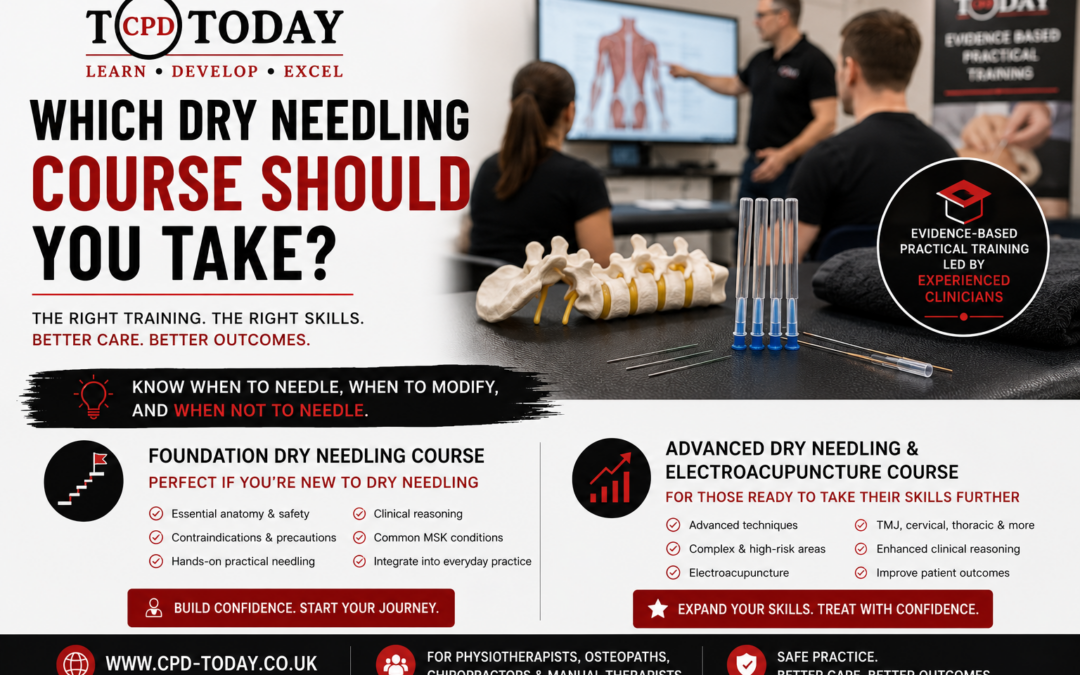
Foundation Dry Needling Course
A Foundation course is the ideal starting point if you have little or no previous dry needling experience.
It is designed to provide the knowledge, practical skills and confidence needed to begin using dry needling safely in clinical practice.
A high-quality Foundation course should include:
Functional anatomy
Surface anatomy
Safety guidelines
Infection control
Contraindications and precautions
Clinical reasoning
Needle handling
Practical supervised needling
Common musculoskeletal conditions
Integration with rehabilitation
At CPD Today, our Foundation Course places equal emphasis on why, when and how to use dry needling—not simply where to place needles.
Foundation Course Best For:
Physiotherapists
Osteopaths
Chiropractors
Sports Therapists
Podiatrists
Other appropriately regulated healthcare professionals with little or no dry needling experience
Advanced Dry Needling Course
Once you’ve developed confidence with basic techniques, an Advanced course allows you to expand your knowledge and treat more complex presentations.
Advanced training focuses on refining decision-making and safely treating regions that require a greater level of anatomical knowledge and technical skill.
Advanced Course Best For:
Healthcare professionals who have already completed a recognised Foundation Dry Needling course (or equivalent) and want to expand their clinical skills.
Should I Go Straight to an Advanced Course?
In most cases, no.
Advanced dry needling builds on the knowledge and practical skills developed during Foundation training. A solid understanding of anatomy, safety, clinical reasoning and basic techniques is essential before progressing.
At CPD Today, we recommend completing the Foundation course first unless you already have equivalent accredited training and experience.
What Makes a Good Dry Needling Course?
When choosing a provider, look beyond the course title.
Ask yourself:
Is the course evidence-based?
Is there plenty of supervised practical time?
Are the instructors experienced clinicians?
Is anatomy taught in detail?
Are contraindications and safety covered thoroughly?
Does the course develop clinical reasoning rather than just techniques?
Will the training integrate into everyday musculoskeletal practice?
Does it meet my insurer’s requirements?
The cheapest course is not always the best value. Investing in high-quality education can improve your confidence, competence and patient outcomes.
Why Choose CPD Today?
At CPD Today, our courses are developed and delivered by experienced clinicians and educators with decades of experience in musculoskeletal practice and postgraduate education.
Our training combines:
Evidence-based teaching
Extensive hands-on practical sessions
Small group learning
Functional anatomy
Clinical reasoning
Safety and best practice
Real clinical application
Ongoing support
Our aim is to help clinicians leave the course feeling confident, competent and ready to integrate dry needling into modern evidence-based practice.
Which Course Is Right for You?
Your Experience
Recommended Course
No previous dry needling experience
Foundation Dry Needling Course
Completed Foundation course
Advanced Dry Needling & Electroacupuncture Course
Want to improve safety and confidence
Foundation Course
Want to treat more complex conditions
Advanced Course
Looking to develop advanced clinical reasoning
Advanced Course
Clinical Takeaway
Choosing the right dry needling course is about more than learning how to insert a needle. The best courses develop clinical reasoning, anatomical knowledge, safety awareness and practical confidence. If you’re new to dry needling, start with a comprehensive Foundation course. Once you’ve mastered the fundamentals, progressing to an Advanced course will help you expand your skills and confidently manage more complex musculoskeletal conditions.
Frequently Asked Questions
I’m new to dry needling. Which course should I choose?
Start with a Foundation Dry Needling course. It provides the essential knowledge and practical skills needed for safe clinical practice.
Can I attend the Advanced course without previous training?
No. Our Advanced course is intended for clinicians who have completed a recognised Foundation Dry Needling course or hold an equivalent qualification.
Does the Advanced course include electroacupuncture?
Yes. CPD Today’s Advanced course includes training in electroacupuncture alongside advanced dry needling techniques.
Who can attend CPD Today courses?
Our courses are designed for appropriately qualified healthcare professionals, including physiotherapists, osteopaths, chiropractors, sports therapists and other manual therapists working within their professional scope of practice.
Will I be confident to use dry needling after the Foundation course?
Yes. Our Foundation course is designed to give you the knowledge, practical skills and confidence to begin integrating dry needling safely into everyday musculoskeletal practice.
Ready to start your dry needling journey?
Whether you’re taking your first steps with our Foundation Dry Needling Course or advancing your skills with our Advanced Dry Needling & Electroacupuncture Course, CPD Today provides evidence-based, hands-on training to help you become a safer, more confident and more effective clinician.
Contraindications for Dry Needling: When Should Dry Needling Be Avoided?
Meta Description: Learn the contraindications and precautions for dry needling, including patient assessment, informed consent, pregnancy, anticoagulants, infection, and safe clinical decision-making for healthcare professionals.
Contraindications for Dry Needling: When Should Dry Needling Be Avoided?
Dry needling is a safe and effective treatment for many musculoskeletal conditions when performed by appropriately trained healthcare professionals. However, no treatment is suitable for every patient, and understanding when not to perform dry needling is just as important as knowing how to perform it.
Effective dry needling begins with a thorough assessment, sound clinical reasoning and an understanding of the patient’s medical history. Identifying contraindications and precautions helps minimise risk, improve patient safety and ensure the most appropriate treatment is chosen.
This guide outlines the commonly recognised contraindications and precautions for dry needling. Clinicians should always follow their professional body’s guidance, local regulations and insurance requirements.
Why Understanding Contraindications Matters
Dry needling should never be viewed as a routine intervention. Every patient presents with unique medical conditions, medications and individual circumstances that may influence whether treatment is appropriate.
Good clinical practice involves asking:
Is dry needling indicated?
Is it safe for this patient?
Are there better alternatives?
Does the potential benefit outweigh any risk?
These questions form the foundation of evidence-based clinical decision-making.
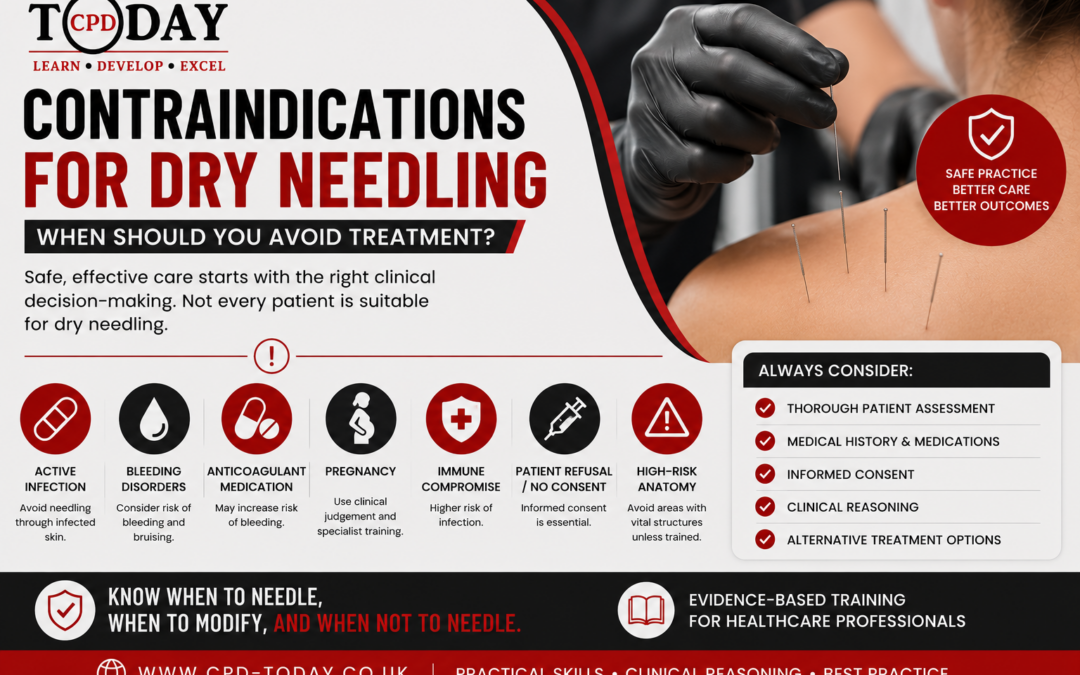
Absolute Contraindications
Absolute contraindications are situations where dry needling should not be performed.
These commonly include:
Patient Refusal
Dry needling should never be performed without informed consent. Patients have the right to decline treatment at any stage.
Lack of Informed Consent
Patients must understand:
Why treatment is recommended
Potential benefits
Possible risks
Alternative treatment options
Expected side effects
Without informed consent, treatment should not proceed.
Local Infection
Avoid needling through:
Cellulitis
Abscesses
Open wounds
Active skin infections
Doing so may increase the risk of spreading infection.
Inability to Cooperate
Patients who cannot remain still or communicate appropriately may not be suitable for treatment due to increased risk of injury.
Relative Contraindications and Precautions
Many patients can still receive dry needling safely, but additional care and clinical judgement are required.
Anticoagulant Medication
Patients taking anticoagulants may have an increased risk of bruising or bleeding.
Treatment is not always contraindicated but should be modified where appropriate.
Bleeding Disorders
Patients with clotting disorders require careful assessment before treatment.
Consider:
Severity
Needle depth
Anatomical location
Potential consequences of bleeding
Pregnancy
Pregnancy is not an absolute contraindication to dry needling.
However, clinicians should possess appropriate training and avoid certain anatomical regions where required. Clinical reasoning and patient-specific assessment are essential.
Diabetes
Patients with diabetes may have:
Delayed healing
Peripheral neuropathy
Altered sensation
Increased infection risk
Treatment may still be appropriate with suitable precautions.
Compromised Immune Function
Patients receiving chemotherapy, immunosuppressant medication or living with immunocompromising conditions may require additional consideration because of altered healing and infection risk.
Lymphoedema
Needling within an area affected by lymphoedema should only be considered after careful assessment because of increased infection risk and altered tissue health.
Joint Replacements and Metal Implants
Although dry needling is often possible, clinicians should avoid direct contact with implants and remain aware of altered anatomy.
Epilepsy
Patients with well-controlled epilepsy can often be treated safely, although clinicians should consider seizure history and minimise unnecessary triggers.
Severe Anxiety or Needle Phobia
Patients with significant anxiety may experience vasovagal reactions or struggle to tolerate treatment.
Alternative treatment options may be more appropriate.
Anatomical Contraindications
Some body regions require particularly advanced anatomical knowledge.
Examples include:
Thorax
Cervical spine
Supraclavicular region
Abdomen
Axilla
Groin
Popliteal fossa
These areas contain important organs, nerves and blood vessels and should only be treated by clinicians with appropriate training and experience.
When Dry Needling May Not Be the Best Option
Even if no formal contraindications exist, dry needling may not always represent the most appropriate intervention.
For example:
Symptoms are improving with exercise alone.
The patient prefers alternative treatment.
There is no clear clinical indication.
Another evidence-based intervention offers greater benefit.
The patient’s goals can be achieved without needling.
The best clinicians know when not to needle.
Clinical Reasoning Comes First
Dry needling should never become a routine treatment applied to every painful muscle.
Instead, clinicians should continually ask:
Does this treatment support the patient’s goals?
Is it supported by current evidence?
Is it appropriate today?
Are there safer or more effective alternatives?
Strong clinical reasoning improves both patient outcomes and patient safety.
Learn Safe Clinical Decision-Making with CPD Today
At CPD Today, we teach far more than needling techniques.
Our Foundation and Advanced Dry Needling courses focus on:
Patient assessment
Contraindications
Relative precautions
Functional anatomy
Clinical reasoning
Safe needling techniques
Evidence-based practice
Practical hands-on supervision
We believe confident clinicians are those who know when to needle, when to modify treatment and when not to needle at all.
Clinical Takeaway
Understanding contraindications is fundamental to safe dry needling practice. While relatively few situations absolutely prohibit treatment, many require careful assessment, modification of technique or consideration of alternative management strategies. Evidence-based clinicians combine anatomical knowledge, patient-centred communication and sound clinical reasoning to ensure every treatment decision prioritises patient safety.
Frequently Asked Questions
Is pregnancy a contraindication to dry needling?
Not necessarily. Pregnancy is generally considered a relative precaution rather than an absolute contraindication. Appropriate assessment, clinical reasoning and training are essential.
Can patients taking blood thinners receive dry needling?
Many can, although clinicians should consider bleeding risk, treatment location and individual patient factors before proceeding.
Can dry needling be performed over an infected area?
No. Dry needling should not be performed through active skin infections, cellulitis or open wounds.
Is informed consent mandatory?
Yes. Patients should understand the purpose, benefits, risks and alternatives before treatment begins.
Who should perform dry needling?
Dry needling should only be performed by appropriately trained healthcare professionals working within their professional scope of practice and following local regulatory and insurance requirements.
References
Brady S, McEvoy J, Dommerholt J, Doody C. (2014). Adverse Events Following Trigger Point Dry Needling: A Prospective Survey of Chartered Physiotherapists. Journal of Manual & Manipulative Therapy, 22(3), 134–140.
Boyce D, Wempe H, Campbell C, et al. (2020). Adverse Events Associated with Therapeutic Dry Needling. International Journal of Sports Physical Therapy, 15(1), 103–113.
Dommerholt J. (2011). Dry Needling—Peripheral and Central Considerations. Journal of Manual & Manipulative Therapy.
World Health Organization. WHO Guidelines on Basic Training and Safety in Acupuncture. (Referenced for safe needle handling and infection prevention principles.)
National Institute for Health and Care Excellence (NICE). Healthcare-associated infections: Prevention and Control in Primary and Community Care.
Continue Your Learning
Expand your understanding of dry needling with our related articles:
What Is Dry Needling?
Dry Needling vs Acupuncture
The Evidence for Dry Needling
Safety Guidelines for Dry Needling
Dry Needling for Low Back Pain
Foundation Dry Needling Course
Advanced Dry Needling & Electroacupuncture
At CPD Today, our evidence-based courses help healthcare professionals develop the knowledge, practical skills and clinical reasoning needed to integrate dry needling safely and effectively into modern musculoskeletal practice.
Safety Guidelines for Dry Needling: Best Practice for Safe and Effective Treatment
Meta Description: Learn the essential safety guidelines for dry needling, including contraindications, precautions, infection control, informed consent and safe clinical practice for healthcare professionals.
Safety Guidelines for Dry Needling: Best Practice for Safe and Effective Treatment
Dry needling is a valuable treatment option for managing musculoskeletal pain and movement disorders. When performed by appropriately trained healthcare professionals, it has an excellent safety profile and can be an effective addition to rehabilitation.
Like any clinical intervention, however, dry needling requires thorough anatomical knowledge, sound clinical reasoning and strict adherence to safety protocols.
Whether you are new to dry needling or looking to refine your practice, understanding current safety guidelines is essential for delivering safe, effective and evidence-based patient care.
Is Dry Needling Safe?
Yes. Research has shown that dry needling is generally considered safe when performed by suitably trained clinicians who understand anatomy, contraindications, infection control and patient selection.
Most adverse events reported in the literature are minor and temporary, including:
Mild soreness
Bruising
Small amounts of bleeding
Temporary fatigue
Short-lived symptom aggravation
Serious complications are extremely uncommon but reinforce the importance of comprehensive training and adherence to safe practice.
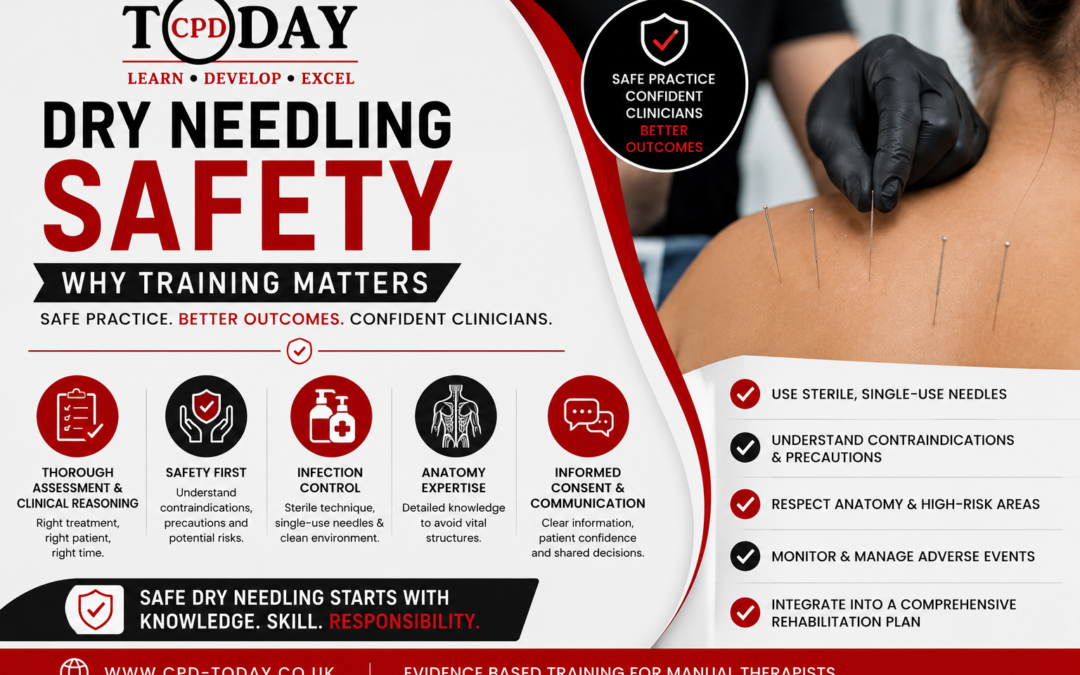
The Foundations of Safe Dry Needling
Safe dry needling begins long before the needle is inserted.
Every treatment should include:
A comprehensive musculoskeletal assessment
Clinical reasoning
Clear diagnosis
Identification of contraindications
Patient education
Informed consent
Appropriate documentation
Dry needling should never be used simply because a patient is in pain—it should always have a clear clinical rationale.
Contraindications
Certain situations mean dry needling should not be performed.
These may include:
Patient refusal
Lack of informed consent
Active local infection
Cellulitis
Needle phobia preventing safe treatment
Inability to remain still during treatment
Uncontrolled medical conditions where needling presents unacceptable risk
Clinicians should always work within local professional guidance and their scope of practice.
Precautions
Some patients may still be suitable for dry needling, but additional care is required.
Examples include:
Anticoagulant medication
Bleeding disorders
Diabetes with impaired healing
Pregnancy
Compromised immune function
Lymphoedema
Metal implants
Joint replacements
Epilepsy
Frailty
Significant anxiety
These situations require careful clinical judgement rather than automatic exclusion.
Infection Control
Strict infection prevention procedures are fundamental to safe practice.
Healthcare professionals should always:
Wash hands before and after treatment
Use sterile, single-use needles
Dispose of needles immediately into approved sharps containers
Maintain a clean treatment environment
Wear gloves where appropriate
Follow local infection prevention policies
Cross-contamination should never be tolerated.
Understanding High-Risk Anatomy
One of the most important aspects of dry needling education is developing an in-depth understanding of anatomy.
Clinicians must appreciate:
Safe needle depth
Needle angle
Underlying neurovascular structures
Lung fields
Abdominal organs
Major blood vessels
Peripheral nerves
Areas requiring particular caution include:
Thorax
Cervical spine
Supraclavicular region
Axilla
Abdomen
Popliteal fossa
Groin
Knowledge of anatomy—not memorisation of techniques—is what keeps patients safe.
Avoiding Serious Complications
Although rare, clinicians should understand the signs and symptoms of complications including:
Pneumothorax
Infection
Vasovagal reactions
Nerve irritation
Significant bleeding
Allergic reactions (for associated products)
Patients should receive clear post-treatment advice explaining what is normal and when they should seek medical attention.
Patient Communication and Consent
Good communication improves both safety and patient confidence.
Before treatment clinicians should explain:
Why dry needling is recommended
Expected benefits
Possible side effects
Alternative treatment options
Expected post-treatment soreness
Aftercare advice
Patients should always have the opportunity to ask questions before providing informed consent.
Clinical Reasoning Is Your Best Safety Tool
Safe clinicians do not simply needle painful muscles.
Instead they ask:
Is dry needling appropriate?
Will it improve this patient’s outcome?
Are there better alternatives?
Does the evidence support its use?
Can the patient tolerate treatment safely?
Clinical reasoning remains the most important component of safe dry needling practice.
Why High-Quality Training Matters
Learning dry needling from experienced educators is essential.
Training should include:
Functional anatomy
Surface anatomy
Safe needle handling
Contraindications
Clinical reasoning
Practical supervision
Adverse event management
Evidence-based application
Weekend courses that focus solely on needle placement without developing clinical reasoning may not adequately prepare clinicians for independent practice.
Learn Safe Dry Needling with CPD Today
At CPD Today, patient safety underpins everything we teach.
Our Foundation and Advanced Dry Needling courses combine:
Evidence-based teaching
Detailed anatomy
Hands-on practical supervision
Clinical reasoning
Safe needling techniques
Recognition of contraindications and precautions
Management of adverse events
Integration with rehabilitation and manual therapy
Our aim is not simply to teach clinicians how to insert needles—but to help them become safe, confident and evidence-based practitioners.
Clinical Takeaway
Dry needling has an excellent safety profile when performed by appropriately trained healthcare professionals who possess strong anatomical knowledge, sound clinical reasoning and follow recognised infection control and safety procedures. Safe practice is about much more than technical skill—it requires careful patient assessment, informed consent, appropriate clinical decision-making and ongoing professional development. High-quality education ensures clinicians have the confidence to deliver effective treatment while minimising risk.
Frequently Asked Questions
Is dry needling safe?
Yes. When performed by appropriately trained healthcare professionals following recognised safety guidelines, dry needling is considered a safe treatment with a low risk of serious complications.
What are the most common side effects?
Temporary soreness, mild bruising, small amounts of bleeding and short-term fatigue are the most frequently reported side effects.
Can dry needling cause pneumothorax?
Although extremely rare, pneumothorax is a recognised complication when needling around the thorax. Thorough anatomical knowledge, appropriate technique and proper training are essential to minimise this risk.
Do patients need to give consent?
Yes. Informed consent should always be obtained before treatment, with patients understanding the benefits, risks, alternatives and expected post-treatment effects.
Who should perform dry needling?
Dry needling should only be performed by appropriately trained healthcare professionals working within their professional scope of practice and complying with local regulatory and insurance requirements.
References
Brady S, McEvoy J, Dommerholt J, Doody C. (2014). Adverse Events Following Trigger Point Dry Needling: A Prospective Survey of Chartered Physiotherapists. Journal of Manual & Manipulative Therapy, 22(3), 134–140.
Boyce D, Wempe H, Campbell C, et al. (2020). Adverse Events Associated with Therapeutic Dry Needling. International Journal of Sports Physical Therapy, 15(1), 103–113.
Dommerholt J. (2011). Dry Needling—Peripheral and Central Considerations. Journal of Manual & Manipulative Therapy.
World Health Organization. WHO Guidelines on Basic Training and Safety in Acupuncture. (Widely referenced for safe needle handling and infection control principles.)
National Institute for Health and Care Excellence (NICE). Healthcare-associated infections: prevention and control in primary and community care.
Continue Your Learning
Expand your knowledge with our related articles:
What Is Dry Needling?
Dry Needling vs Acupuncture
The Evidence for Dry Needling
Dry Needling for Low Back Pain
Dry Needling for Neck Pain
Dry Needling for Shoulder Pain
Foundation Dry Needling Course
Advanced Dry Needling & Electroacupuncture Course
At CPD Today, we are committed to delivering evidence-based, practical education that equips clinicians with the skills, confidence and clinical reasoning to use dry needling safely and effectively in modern musculoskeletal practice.
Learn the difference between dry needling and acupuncture, including their principles, evidence, uses and who can perform them. Discover which approach may be appropriate for different musculoskeletal conditions.
Dry Needling vs Acupuncture: Understanding the Difference
One of the most common questions patients ask is:
“Is dry needling the same as acupuncture?”
The short answer is no.
Although both techniques use the same type of fine, sterile needles, they are based on very different philosophies, assessment methods and treatment approaches.
Understanding these differences is important for both healthcare professionals and patients considering treatment.
What Is Dry Needling?
Dry needling is an evidence-informed treatment used by appropriately trained healthcare professionals to assess and manage musculoskeletal pain and movement disorders.
It is based on modern:
Functional anatomy
Neurophysiology
Pain science
Biomechanics
Clinical reasoning
Rather than following traditional energy pathways, dry needling targets muscles, tendons, fascia and other soft tissues identified during a comprehensive musculoskeletal assessment.
Treatment is always guided by the patient’s symptoms, movement patterns and clinical findings.
What Is Acupuncture?
Traditional acupuncture has been practised for thousands of years and forms part of Traditional Chinese Medicine (TCM).
It is based on the concept that health depends upon the balanced flow of Qi (vital energy) through channels known as meridians.
According to traditional acupuncture theory, illness or pain develops when this flow becomes disrupted.
Treatment involves inserting needles into specific acupuncture points to restore balance and promote healing.
Modern Western medical acupuncture also exists and often incorporates current anatomical and neurophysiological understanding while using acupuncture points.
The Main Differences
Dry Needling
Acupuncture
Based on anatomy, biomechanics and pain science
Traditionally based on Traditional Chinese Medicine
Treats musculoskeletal dysfunction
Traditionally aims to restore balance of Qi
Guided by clinical assessment
Guided by meridian diagnosis and acupuncture points
Commonly used in rehabilitation
Used for a wide variety of health conditions
Often combined with exercise and manual therapy
May be used as a stand-alone or complementary treatment
Although the theoretical models differ, both techniques may stimulate physiological responses that contribute to pain relief and improved function.
What Conditions Can Dry Needling Treat?
Dry needling is commonly used as part of a rehabilitation programme for:
Low back pain
Neck pain
Shoulder pain
Rotator cuff disorders
Hip pain
Gluteal tendinopathy
Tennis elbow
Golfer’s elbow
Achilles tendinopathy
Plantar fasciitis
Headaches
TMJ dysfunction
Sports injuries
Myofascial pain
It is typically combined with education, exercise rehabilitation and manual therapy to achieve the best outcomes.
What Conditions Is Acupuncture Used For?
Acupuncture may be used for a broad range of conditions, including:
Musculoskeletal pain
Headaches and migraines
Chronic pain
Stress and anxiety
Nausea
Some women’s health conditions
General wellbeing
The specific treatment approach depends on the practitioner’s training and the style of acupuncture being practised.
Is One Better Than the Other?
Neither treatment is inherently “better.”
They simply have different theoretical foundations and clinical objectives.
For healthcare professionals working in musculoskeletal practice, dry needling integrates naturally with:
Manual therapy
Exercise prescription
Clinical reasoning
Functional rehabilitation
Patient education
Many clinicians choose dry needling because it complements evidence-based musculoskeletal care rather than replacing it.
The most appropriate treatment always depends on the patient’s presentation, preferences and the clinician’s assessment.
Are the Needles the Same?
Yes.
Both dry needling and acupuncture generally use sterile, disposable, single-use filament needles.
The differences lie not in the needles themselves but in:
Why they are used
Where they are inserted
How treatment points are selected
The clinical reasoning behind treatment
Is Dry Needling Evidence Based?
A growing body of research supports dry needling for several musculoskeletal conditions, particularly when it forms part of a comprehensive rehabilitation programme.
Research suggests dry needling may help:
Reduce pain
Improve movement
Decrease muscle sensitivity
Improve function
Support participation in rehabilitation
Like all treatments, it should be used alongside sound clinical reasoning and evidence-based practice.
Why Learn Dry Needling?
For musculoskeletal clinicians, dry needling can become a valuable addition to an already comprehensive clinical skill set.
Benefits include:
Greater treatment options
Enhanced patient care
Improved clinical confidence
Better integration with rehabilitation
Development of advanced palpation skills
Stronger understanding of anatomy and pain science
Dry needling is not intended to replace exercise therapy or manual therapy—it is another tool that can support patient recovery when used appropriately.
Learn Dry Needling with CPD Today
At CPD Today, our Dry Needling courses are designed specifically for healthcare professionals who want practical, evidence-based training that can be applied immediately in clinical practice.
Led by experienced clinicians, our courses focus on:
Clinical reasoning
Functional anatomy
Safe needling techniques
Contraindications and precautions
Hands-on practical teaching
Integration with manual therapy and rehabilitation
Whether you’re beginning your dry needling journey or progressing to advanced techniques, our courses are designed to help you develop the knowledge, confidence and practical skills needed to use dry needling safely and effectively.
Frequently Asked Questions
Is dry needling the same as acupuncture?
No. While both use fine needles, dry needling is based on modern musculoskeletal assessment and clinical reasoning, whereas traditional acupuncture is based on Traditional Chinese Medicine principles.
Do they use the same needles?
Yes. Both techniques typically use sterile, single-use filament needles.
Which treatment is better for musculoskeletal pain?
Both may have a role depending on the patient and clinician. Dry needling is specifically designed to integrate with evidence-based musculoskeletal assessment and rehabilitation.
Can physiotherapists and osteopaths learn dry needling?
Yes. Many regulated healthcare professionals undertake accredited dry needling training, subject to their professional body and insurance requirements.
Does dry needling replace manual therapy?
No. Dry needling is designed to complement manual therapy, exercise and patient education as part of a comprehensive rehabilitation programme.
Continue Your Learning
Interested in developing your dry needling skills?
Explore CPD Today’s Foundation and Advanced Dry Needling courses, where you’ll gain practical, evidence-based training from experienced clinicians, helping you integrate dry needling safely and confidently into modern musculoskeletal practice.
The Evidence for Dry Needling: What Does the Research Say?
Meta Description: Discover what the latest research says about dry needling. Explore the evidence, benefits, limitations and clinical applications of dry needling in modern musculoskeletal practice.
The Evidence for Dry Needling: What Does the Research Say?
Dry needling has become an increasingly popular treatment option for musculoskeletal pain, with many physiotherapists, osteopaths, chiropractors and other healthcare professionals incorporating it into everyday clinical practice.
However, one question is asked time and time again:
“Is dry needling evidence based?”
The answer is yes—but with an important caveat.
Current research supports dry needling for a range of musculoskeletal conditions, particularly when it is used as part of a comprehensive rehabilitation programme rather than as a stand-alone treatment. Like many interventions in healthcare, its effectiveness depends on appropriate patient selection, sound clinical reasoning and integration with other evidence-based treatments.
What Is Dry Needling?
Dry needling is an evidence-informed treatment that uses fine, sterile, single-use needles to target muscles, myofascial trigger points and other soft tissues that may contribute to pain and movement dysfunction.
Unlike traditional acupuncture, dry needling is based on modern scientific principles, including:
Functional anatomy
Neurophysiology
Pain science
Biomechanics
Clinical reasoning
Treatment is guided by a detailed musculoskeletal assessment rather than traditional Chinese medicine concepts, making it a valuable adjunct within modern rehabilitation.
What Does the Research Show?
Over the last two decades, hundreds of randomised controlled trials, systematic reviews and meta-analyses have investigated the effectiveness of dry needling.
Overall, the evidence suggests dry needling can provide short- to medium-term improvements in pain, function and movement, particularly when combined with exercise therapy, education and manual therapy.
Research indicates dry needling may help:
Reduce pain intensity
Improve range of movement
Reduce muscle tenderness
Improve muscle activation
Decrease myofascial trigger point sensitivity
Improve physical function
Enhance participation in rehabilitation
Support return to work and sport
The strongest evidence supports dry needling as one component of a multimodal treatment programme, rather than as a stand-alone intervention.
Conditions Supported by Current Evidence
Low Back Pain
Moderate-quality evidence suggests dry needling can reduce pain and disability in patients with mechanical low back pain, particularly when combined with exercise and rehabilitation.
Neck Pain
Research demonstrates improvements in pain and cervical movement when dry needling is incorporated into treatment for acute and chronic neck pain.
Shoulder Pain
Systematic reviews report moderate evidence for reducing pain and improving function in patients with rotator cuff-related shoulder pain and subacromial pain syndrome.
Plantar Fasciitis
Emerging evidence indicates dry needling may reduce heel pain and improve walking ability when combined with appropriate loading programmes.
Tennis Elbow
Studies suggest dry needling may improve grip strength while reducing pain in patients with lateral elbow tendinopathy.
Temporomandibular Disorders (TMJ)
Growing evidence supports the use of dry needling for reducing jaw pain, muscle tension and improving mouth opening in selected patients with temporomandibular disorders.
How Does Dry Needling Work?
Although research continues to evolve, several physiological mechanisms have been proposed.
Pain Modulation
Needling stimulates the nervous system, activating descending inhibitory pathways that can reduce pain sensitivity.
Mechanical Effects
Dry needling may decrease excessive muscle tension and improve tissue extensibility.
Improved Local Circulation
Needling appears to increase local blood flow, potentially supporting tissue healing and recovery.
Neurophysiological Changes
Research suggests dry needling influences both peripheral and central pain processing, helping to normalise muscle function and reduce pain.
Facilitating Rehabilitation
By reducing pain and muscle guarding, dry needling often enables patients to engage more effectively with exercise therapy and rehabilitation programmes.
What Are the Limitations?
Like all interventions, dry needling is not a universal solution.
Research varies considerably regarding:
Needling techniques
Treatment frequency
Target tissues
Patient populations
Outcome measures
Follow-up periods
Consequently, no single protocol is appropriate for every patient.
Modern evidence-based practice combines:
The best available research
Clinical expertise
Patient values and preferences
This combination remains the cornerstone of high-quality musculoskeletal care.
Dry Needling Should Not Replace Rehabilitation
One of the clearest messages from current research is that dry needling works best when integrated into a broader rehabilitation programme.
The most effective management typically combines dry needling with:
Patient education
Exercise therapy
Manual therapy
Load management
Functional rehabilitation
Lifestyle advice
Self-management strategies
This approach reflects current international clinical guidelines for managing musculoskeletal pain.
Why Clinical Reasoning Matters
The evidence does not support indiscriminate needling.
Successful outcomes depend on:
Accurate diagnosis
Appropriate patient selection
Thorough assessment
Safe and competent technique
Clear treatment goals
Ongoing reassessment
Dry needling is not simply about inserting needles—it is about making informed clinical decisions that enhance patient outcomes.
Learn Evidence-Based Dry Needling with CPD Today
At CPD Today, we believe great clinicians combine scientific evidence with exceptional practical skills and sound clinical reasoning.
Our Foundation and Advanced Dry Needling courses are designed specifically for healthcare professionals and focus on:
Current evidence and research
Functional anatomy
Safe needling techniques
Contraindications and precautions
Clinical reasoning
Hands-on practical training
Integrating dry needling into modern musculoskeletal rehabilitation
Rather than teaching isolated techniques, our courses help clinicians understand when, why and how to use dry needling safely, confidently and effectively.
Whether you are beginning your dry needling journey or expanding your existing skills, our courses are designed to support evidence-based clinical practice.
Clinical Takeaway
Current evidence suggests that dry needling can be an effective treatment for a range of musculoskeletal conditions, particularly when used as part of a comprehensive rehabilitation programme that includes education, exercise therapy and manual therapy. It should not be viewed as a stand-alone treatment but as one component of evidence-based patient care. Clinicians who combine strong clinical reasoning with high-quality practical skills are best placed to achieve meaningful improvements in pain, function and patient outcomes.
Frequently Asked Questions
Is dry needling evidence based?
Yes. Numerous systematic reviews and meta-analyses support dry needling for several musculoskeletal conditions, particularly when combined with rehabilitation.
Does dry needling cure pain?
No. Dry needling can reduce pain and improve movement, but it is most effective when integrated into a comprehensive management plan.
Is there strong evidence for every condition?
No. Evidence strength varies between conditions, and research continues to evolve.
Why shouldn’t dry needling be used on its own?
Pain is influenced by biological, psychological and social factors. Combining dry needling with exercise, education and rehabilitation generally provides superior outcomes.
Who can learn dry needling?
Dry needling should only be performed by appropriately trained healthcare professionals working within their professional scope of practice and following local regulatory and insurance requirements.
References
Kietrys DM, Palombaro KM, Azzaretto E, et al. (2013). Effectiveness of Dry Needling for Upper-Quarter Myofascial Pain: A Systematic Review and Meta-analysis.Journal of Orthopaedic & Sports Physical Therapy, 43(9), 620–634. https://www.jospt.org/doi/10.2519/jospt.2013.4668
Liu L, Huang QM, Liu QG, et al. (2015). Effectiveness of Dry Needling for Myofascial Trigger Points Associated with Neck and Shoulder Pain.Archives of Physical Medicine and Rehabilitation, 96(5), 944–955. https://doi.org/10.1016/j.apmr.2014.12.015
Hu HT, Gao H, Ma RJ, et al. (2018). Dry Needling for Low Back Pain: A Systematic Review and Meta-analysis.Archives of Physical Medicine and Rehabilitation, 99(1), 144–152. https://doi.org/10.1016/j.apmr.2017.06.008
Navarro-Santana MJ, Sánchez-Infante J, Gómez-Chiguano GF, et al. (2021). Effects of Trigger Point Dry Needling for Non-traumatic Shoulder Pain.Physical Therapy, 101(2). https://doi.org/10.1093/ptj/pzaa216
Gattie E, Cleland JA, Snodgrass SJ. (2017). The Effectiveness of Trigger Point Dry Needling for Musculoskeletal Conditions by Physical Therapists: A Systematic Review and Meta-analysis.Journal of Orthopaedic & Sports Physical Therapy, 47(3), 133–149. https://www.jospt.org/doi/10.2519/jospt.2017.7096
National Institute for Health and Care Excellence (NICE). Chronic pain (primary and secondary) in over 16s: assessment of all chronic pain and management of chronic primary pain (NG193).https://www.nice.org.uk/guidance/ng193
Continue Your Learning
If you’re looking to develop your knowledge and practical skills, explore CPD Today’s Foundation and Advanced Dry Needling courses. Our evidence-based, hands-on training is designed for physiotherapists, osteopaths, chiropractors and other manual therapists who want to integrate dry needling safely and effectively into modern musculoskeletal practice.
Further reading:
What Is Dry Needling?
Dry Needling vs Acupuncture
Dry Needling Safety: Contraindications and Precautions
Dry needling is a skilled treatment technique used by appropriately trained healthcare professionals to help reduce pain, improve movement and support rehabilitation. It involves inserting a fine, sterile, single-use filament needle into muscles, connective tissue or other musculoskeletal structures to address pain and dysfunction.
Despite using similar needles, dry needling is not the same as traditional acupuncture. Dry needling is based on modern anatomy, neurophysiology, pain science and clinical reasoning. Treatment is guided by a thorough musculoskeletal assessment and aims to address the underlying cause of a patient’s symptoms.
At CPD Today, our evidence-based dry needling courses are designed to help physiotherapists, osteopaths, chiropractors and other manual therapists develop safe, effective and clinically relevant needling skills that can be integrated into everyday practice.
How Does Dry Needling Work?
Although research continues to develop our understanding, dry needling appears to work through several mechanisms:
Reducing Muscle Tension
Needling can help reduce excessive muscle activity and improve muscle relaxation, particularly where myofascial trigger points or increased muscle tone are contributing to pain.
Modulating Pain
Dry needling stimulates the nervous system, activating natural pain-modulating pathways within the spinal cord and brain. This can reduce pain sensitivity and improve patient comfort.
Improving Blood Flow
Treatment may increase local circulation, supporting tissue healing and recovery by improving oxygen and nutrient delivery.
Restoring Movement
By reducing pain and muscle guarding, dry needling often allows patients to move more freely and participate more effectively in rehabilitation exercises.
Enhancing Rehabilitation
Dry needling is most effective when combined with education, manual therapy and progressive exercise rather than being used as a stand-alone treatment.
What Conditions Can Dry Needling Help?
When used appropriately as part of a comprehensive treatment programme, dry needling may benefit patients with:
Neck pain
Low back pain
Shoulder pain
Rotator cuff disorders
Tennis elbow
Golfer’s elbow
Hip pain
Gluteal tendinopathy
Knee pain
Plantar fasciitis
Achilles tendinopathy
Muscle strains
Sports injuries
Headaches
Temporomandibular disorders (TMJ dysfunction)
Myofascial pain syndrome
Treatment should always follow a detailed clinical assessment to determine whether dry needling is appropriate for the individual patient.
Is Dry Needling Evidence Based?
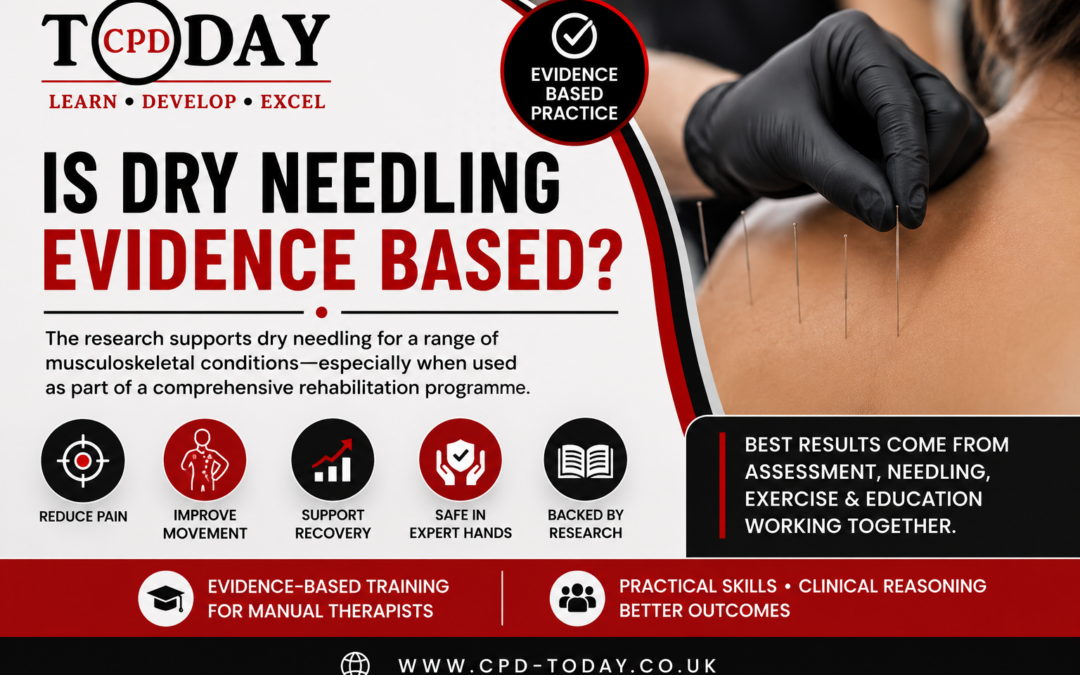
Yes. A growing body of research supports the use of dry needling for a range of musculoskeletal conditions, particularly when integrated within a broader rehabilitation programme.
Current evidence suggests dry needling may:
Reduce pain
Improve range of movement
Decrease muscle sensitivity
Improve function
Support faster rehabilitation
Increase tolerance to exercise therapy
As with any intervention, outcomes depend on accurate assessment, appropriate patient selection and sound clinical reasoning.
Is Dry Needling Safe?
When performed by appropriately trained healthcare professionals using sterile, single-use needles and following recognised safety guidelines, dry needling is considered a safe treatment.
Practitioners must have a detailed understanding of:
Anatomy
Neurovascular structures
Contraindications
Precautions
Infection control
Safe needling depth
Clinical reasoning
Consent procedures
Quality education and supervised practical training are essential before introducing dry needling into clinical practice.
Who Can Train in Dry Needling?
Dry needling training is commonly undertaken by registered healthcare professionals, including:
Physiotherapists
Osteopaths
Chiropractors
Sports Therapists (where permitted by professional body and insurer)
Medical Practitioners
Other regulated musculoskeletal professionals
Always check your professional body’s guidance and insurance requirements before practising.
Why Learn Dry Needling?
Adding dry needling to your clinical toolkit can help you:
Expand your treatment options
Improve patient outcomes
Increase clinical confidence
Integrate needling with manual therapy and rehabilitation
Develop advanced clinical reasoning skills
Support patients with persistent musculoskeletal pain
It is not a replacement for good assessment or rehabilitation—it is another evidence-informed tool that can complement high-quality patient care.
Why Choose CPD Today for Dry Needling Training?
At CPD Today, we believe practical skills should always be underpinned by sound clinical reasoning.
Our courses are led by experienced clinicians who continue to work in musculoskeletal practice, ensuring that teaching reflects current evidence and real-world clinical application.
Our courses focus on:
Evidence-based practice
Hands-on practical training
Small group teaching
Clinical reasoning
Safety and patient selection
Common clinical presentations
Integration with manual therapy and exercise rehabilitation
Whether you are taking your first steps into dry needling or progressing to advanced techniques, our aim is to help you develop the confidence and competence to apply these skills safely in clinical practice.
Frequently Asked Questions
Does dry needling hurt?
Most patients experience only mild discomfort. Some muscles may produce a brief twitch response, followed by a feeling of reduced tension. Temporary soreness for 24–48 hours is common.
Is dry needling the same as acupuncture?
No. Although similar needles are used, dry needling is based on modern musculoskeletal assessment, anatomy and pain science, whereas traditional acupuncture is based on traditional Chinese medicine principles.
How long does treatment take?
Needling itself often takes only a few minutes, but it forms part of a wider clinical assessment and treatment session.
Can dry needling be combined with other treatments?
Yes. Dry needling is commonly combined with manual therapy, exercise rehabilitation, education, taping and movement retraining.
Is dry needling suitable for everyone?
No. Certain medical conditions, medications and patient factors may mean dry needling is not appropriate. A full assessment should always be carried out before treatment.
How can I learn dry needling?
Healthcare professionals should undertake accredited, evidence-based training that includes anatomy, safety, practical skills and clinical reasoning before introducing dry needling into practice.
Continue Learning
If you’re looking to develop safe, evidence-based dry needling skills, explore the CPD Today Dry Needling courses. Our Foundation and Advanced programmes combine practical teaching with current research, clinical reasoning and real-world application to help you integrate dry needling confidently into musculoskeletal practice.